Overview
LOG GE was a company-wide modernization to consolidate two mature desktop platforms (LOG 5x and QDesk) into a unified web product. The goal wasn’t just a UI refresh - it was enabling a new delivery model (web + SaaS), expanding the addressable market, and unlocking new revenue streams by making workflow automation easier to adopt across large organizations. I led product design across discovery, system definition, and delivery of the core workflows, supported by a scalable design system that enabled consistent engineering execution.
Role & approach
This program modernized two legacy desktop platforms into a coherent web product - with the long-term intent to support SaaS delivery. I led design from problem framing to delivery: mapping critical workflows, defining a shared information architecture, and creating a design system that enabled engineering to ship consistently across modules. I partnered with PM on sequencing (what to migrate first), validated key flows with power users, and made trade-offs to preserve familiar mental models while removing legacy complexity.
Core workflow: Assistant
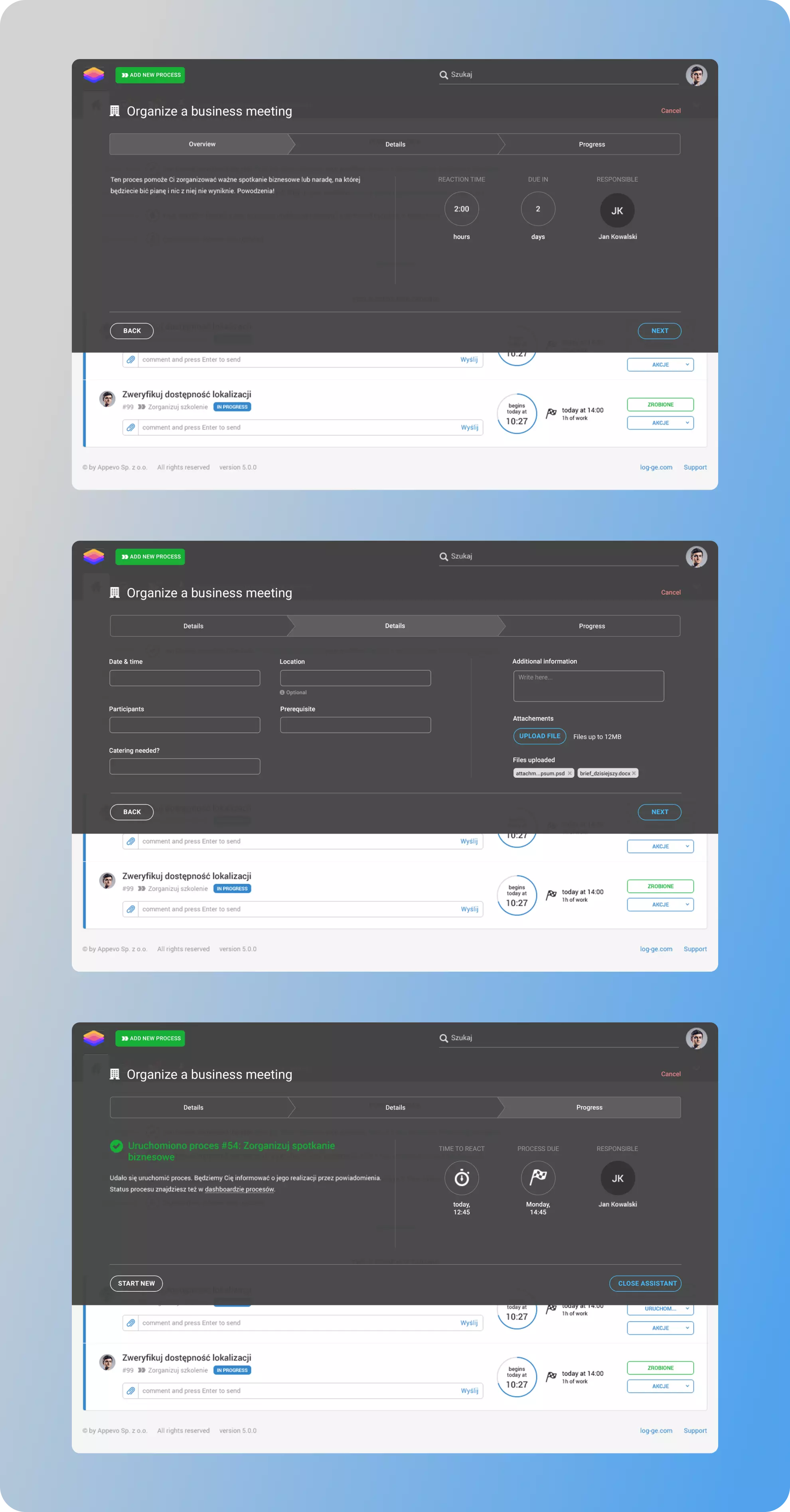
In the legacy tools, users started almost everything with search - but initiation still required jumping between screens, re-entering context, and manually assigning responsibilities. We designed a single “Assistant” entry point that lets users find a process, confirm required inputs, auto-suggest owners based on org structure, and launch execution in one continuous flow. This became the default start for day-to-day work and reduced friction for onboarding new teams.
Problem statement
How might we reduce time-to-start for common processes by collapsing search, context, and assignment into one guided flow?
Workflow builder
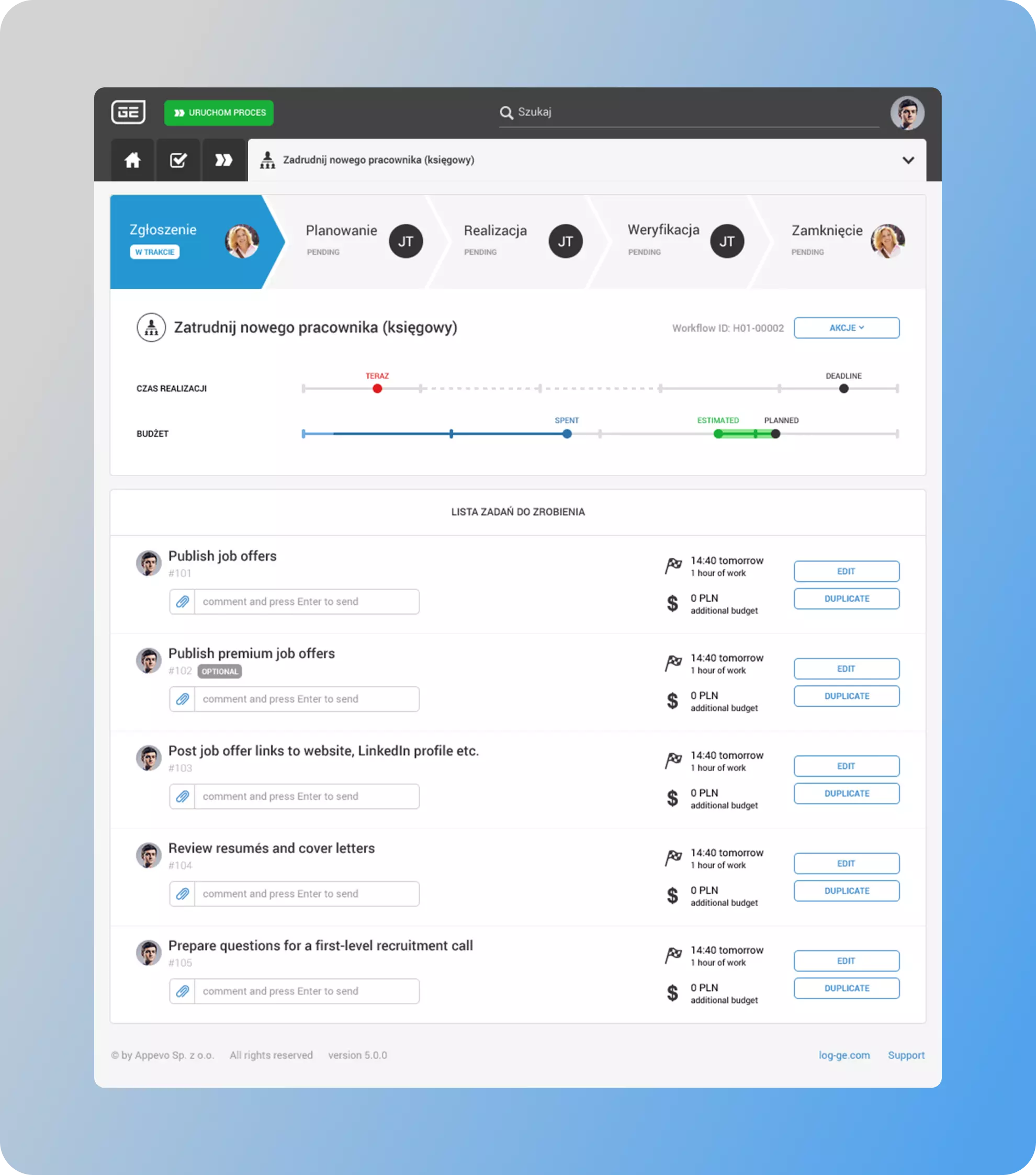
To scale across departments, customers needed a consistent way to define and run workflows without bespoke configuration. We designed a guided workflow builder that mirrors how teams already worked (request → plan → execute → verify → close), while making requirements explicit at each step. The key design decision was to keep it structured enough for governance (templates, required fields, roles) but flexible enough for real-world variation. Time and cost estimates were integrated directly into the flow to support planning and auditability.
Dashboards & reporting
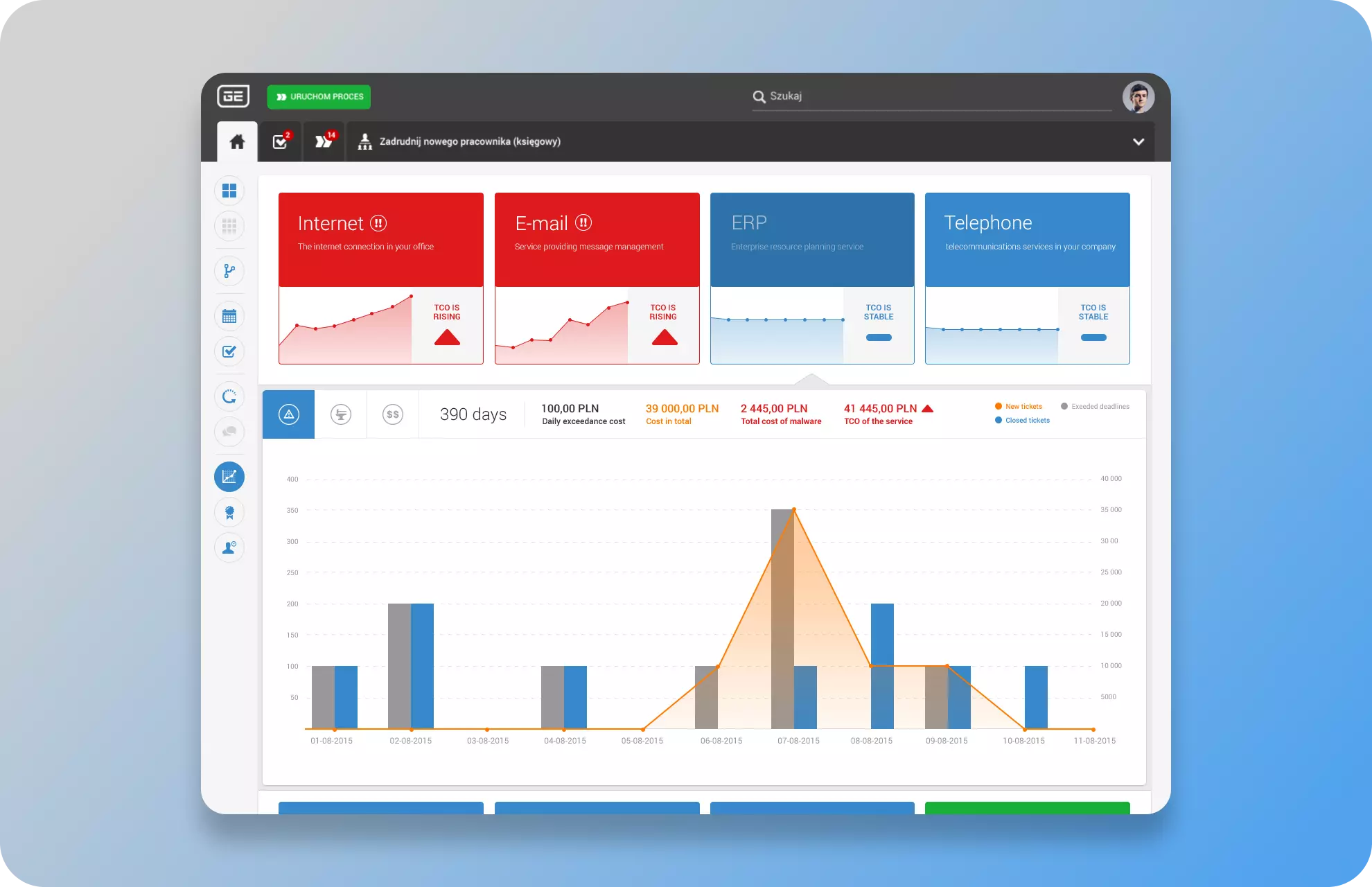
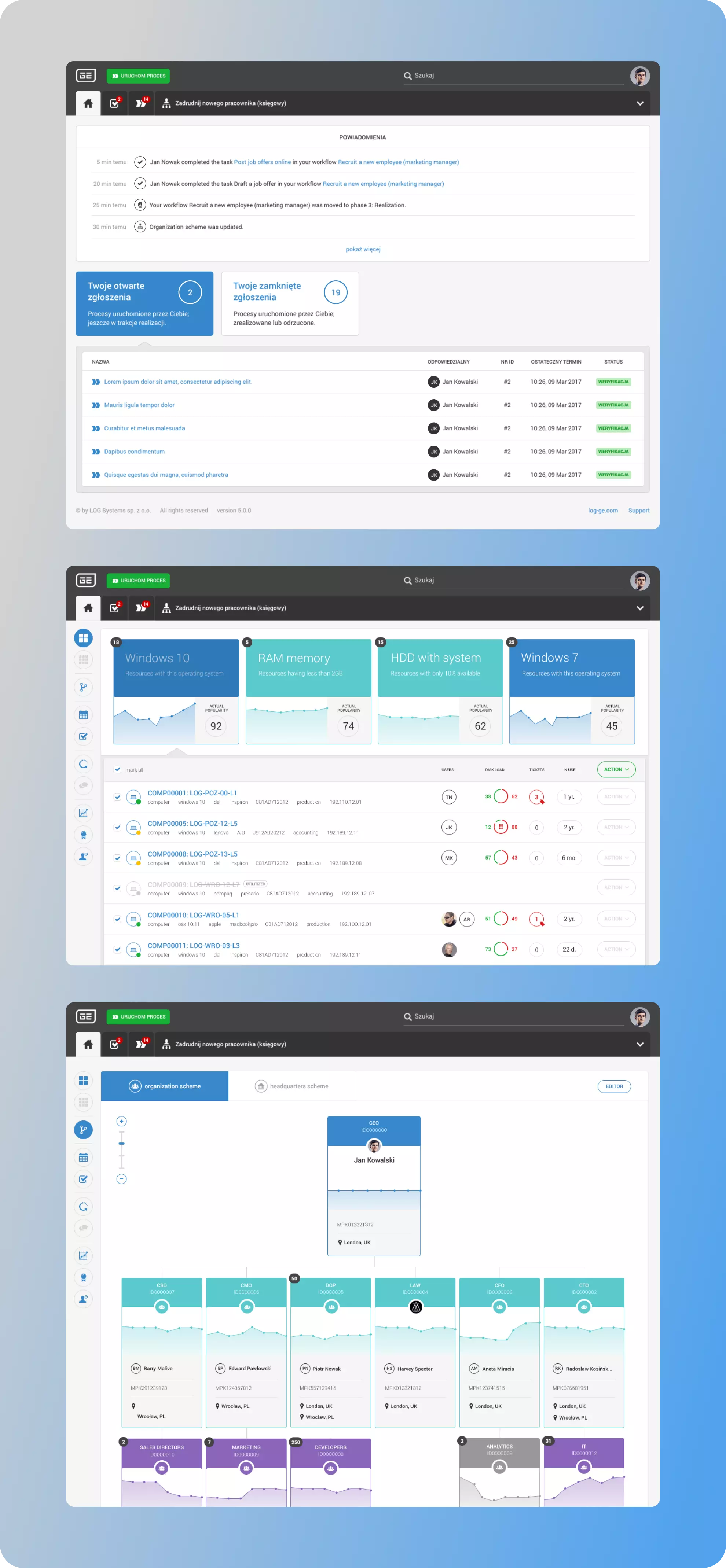
Moving to the web enabled broader visibility: executives and operations teams wanted real-time insight without exporting spreadsheets. We designed dashboards that surfaced what mattered for decision-making - asset utilization, compliance gaps, process bottlenecks, and license risk - with drill-down paths from a metric to the exact owner and next action. This turned reporting from a static deliverable into an operational control surface.
Outcomes
LOG GE unlocked a new chapter for the business: a unified web product that supported faster rollouts, broader stakeholder access, and a path to SaaS delivery. Existing enterprise customers migrated to the web platform while sales used the new positioning to enter additional verticals (including banking and public sector). The product reduced rollout friction (no desktop installs), improved scalability for multi-department deployments, and created space for modular packaging and subscription-based pricing.
Key decisions & trade-offs
We kept core mental models familiar for power users while simplifying navigation and standardizing patterns through a design system. We avoided over-promising “AI automation” and instead focused on reliable workflow guidance, ownership, and reporting - the foundations required for a successful SaaS transition.