Solution design
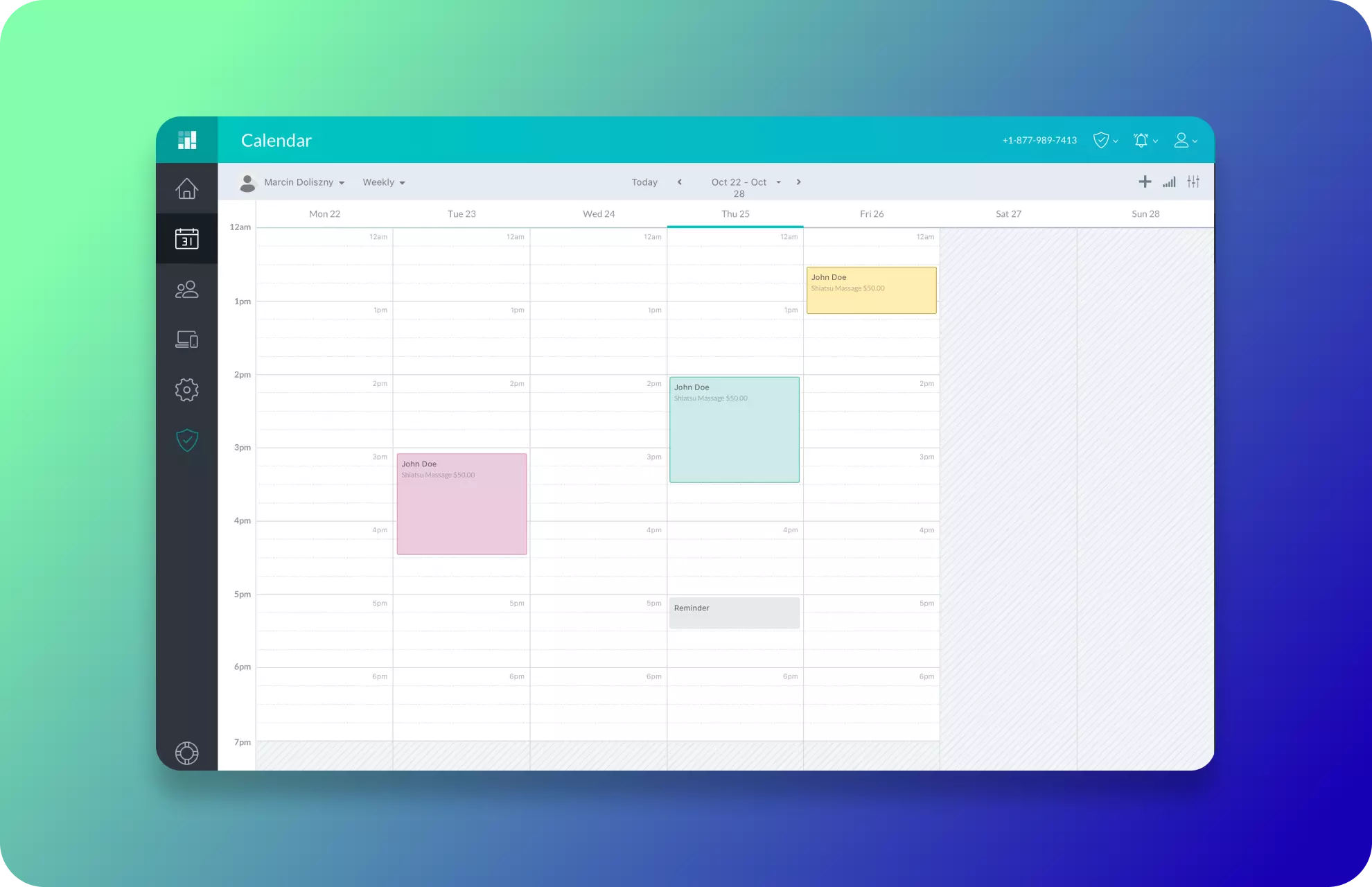
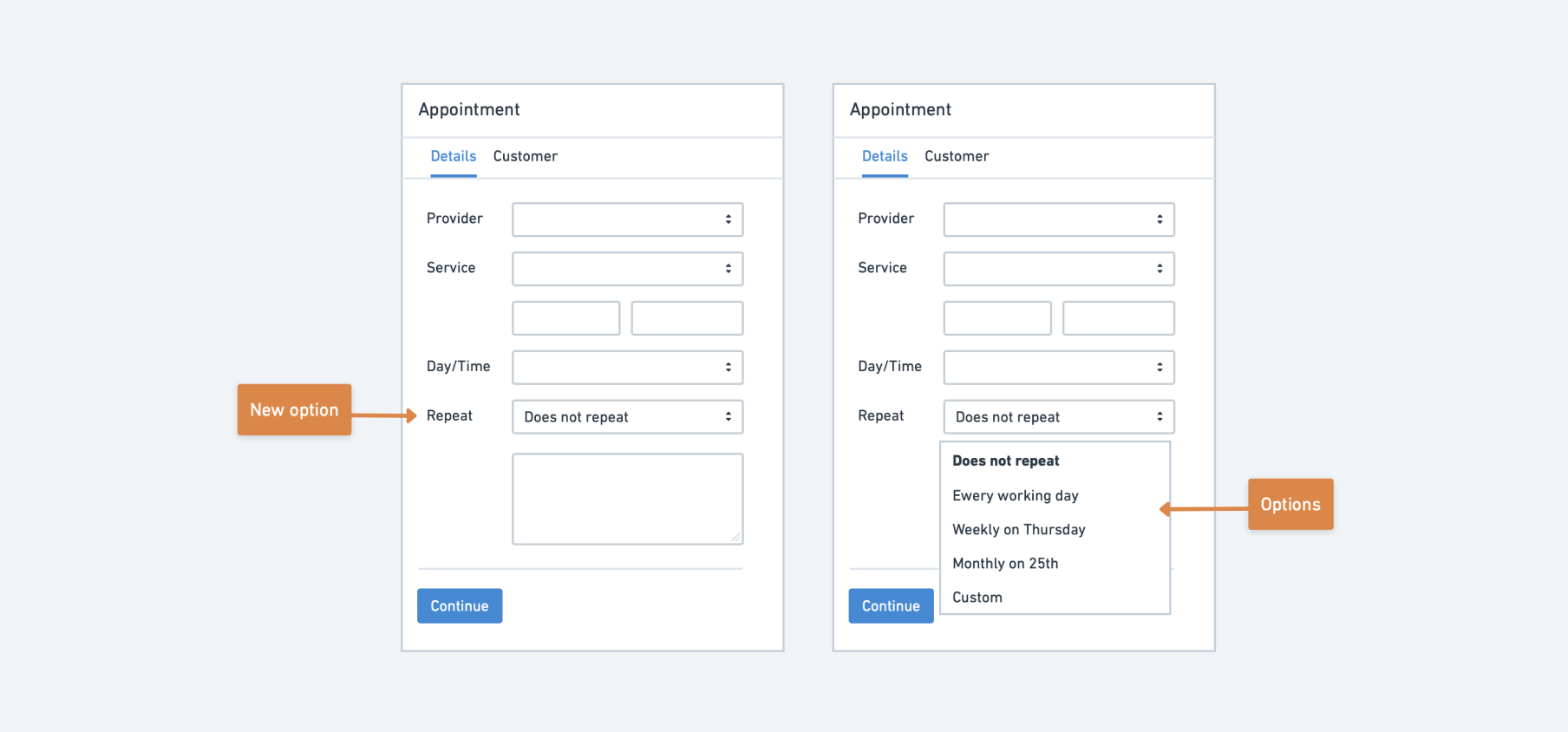
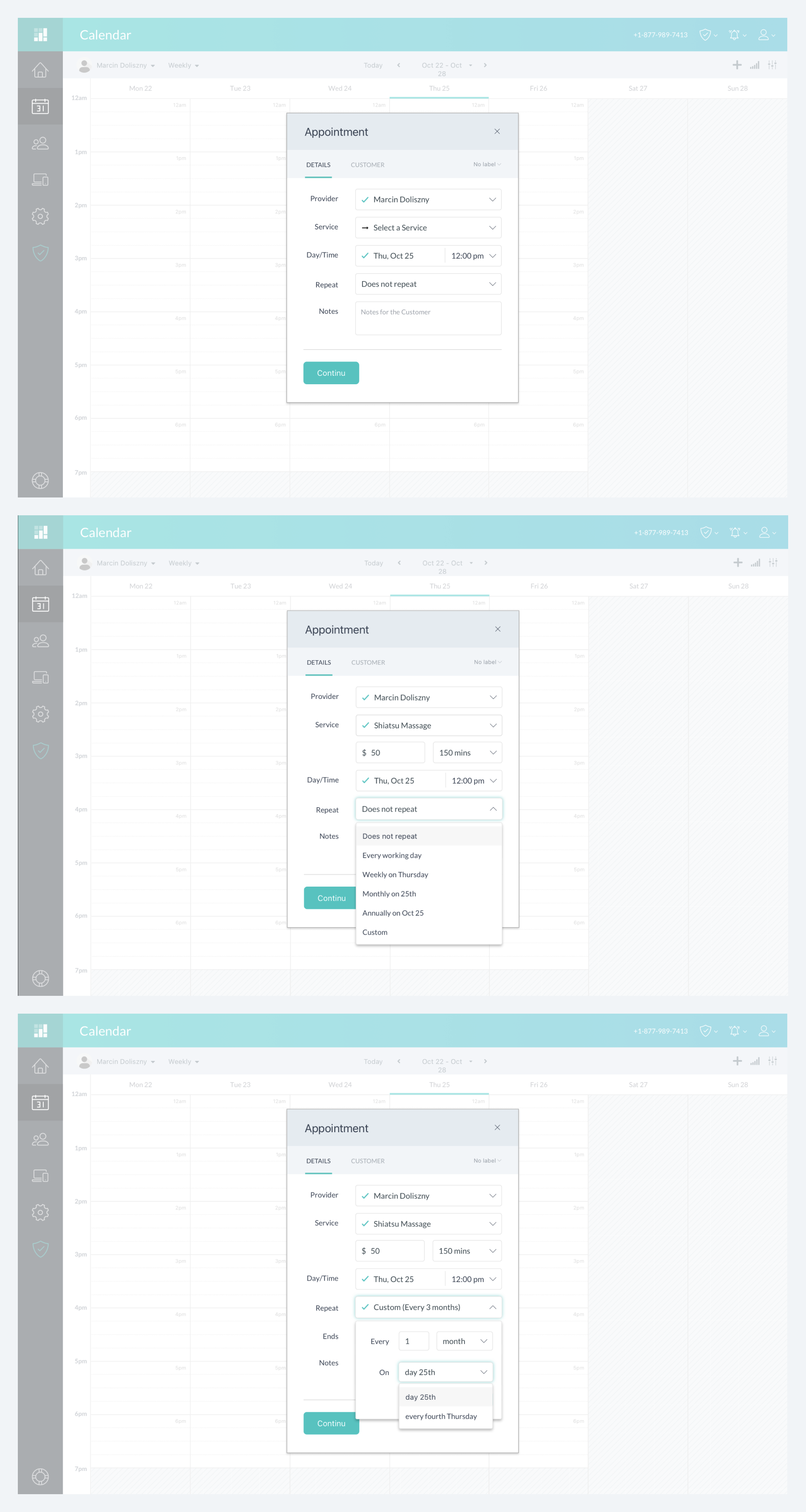
I explored multiple interaction models (single event → “make recurring”, dedicated recurring editor, and template-based scheduling). We chose a calendar-native approach: users create an appointment the way they already do, then turn it into a series with clear frequency rules and an explicit exceptions model (skip, reschedule, edit one vs edit series). This reduced learning cost and made the feature safe for busy operators.
Validation & delivery
I built a high-fidelity prototype and tested it with active Setmore customers to validate comprehension of recurrence rules and exception handling. The biggest risk was “silent mistakes” (editing one event vs the series), so we added explicit confirmation patterns and clearer copy. I partnered with engineering on constraints (payment flows, edge cases, performance) and produced implementation-ready specs to support a staged rollout.
Outcomes
Recurring appointments became a meaningful lever for both customer retention and monetization. We launched the feature behind paid plans and tracked adoption, repeat usage, and support volume to ensure the workflow stayed reliable at scale. Within the first three months, early usage signals showed steady adoption, a meaningful number of recurring series created, and initial paid-plan revenue impact.
$1k
Paid-plan MRR
(first 3 months)
8.1k
Recurring appointments
created
14%
Active accounts using
recurring bookings
Early signals measured after 3 months